
If you’re trying to sell an inherited house in El Paso with a mortgage or lien, the first thing to know is that having debt attached to the property does not automatically prevent you from selling it.
But before you decide what to do with the house, you need to figure out exactly what is owed and what has to be resolved.
Maybe there’s still a mortgage. Maybe property taxes are behind. Maybe title turns up a judgment, HOA lien, MERP claim, or something the family didn’t even know was attached to the property.
I’ve dealt with situations like these firsthand, and the numbers can change quickly once you find out what is actually owed.
So the real question usually isn’t just:
“Can I sell the house?”
It’s:
“What is attached to the property, what has to be paid or resolved, and what will actually be left for the heirs?”
That’s what we’re going to work through here—without turning it into a legal textbook.
Selling an Inherited Property With Debt in El Paso: What Heirs Need to Know
When someone inherits a house in El Paso, it’s pretty common for there to be some unfinished financial business attached to it. Maybe there’s still a mortgage, unpaid property taxes, HOA dues, or a lien you didn’t even know existed until you started asking questions.
The part that trips most people up is this: you don’t automatically inherit the debt personally, but the debt does stay attached to the property. That means it has to be dealt with before the home can be sold or transferred, usually as part of the closing process.
Another factor many heirs don't realize is timing. If the estate is still going through probate, the process can affect when the property can be sold. Understanding how long probate typically takes in Texas can help you set realistic expectations.
This is something I see regularly with inherited homes here in El Paso.
The good news is that having debt on the property doesn’t mean you’re stuck. In fact, many heirs are surprised to learn they have more options than they think. Depending on the condition of the property, the remaining debt, and their long-term goals, some choose to keep the home as a rental while others decide selling makes more sense.
Yes, You Can Sell a House With a Mortgage
Yes, you can sell an inherited house in El Paso even if there’s still a mortgage on the property. If the person who passed away still had a mortgage on the property, that doesn’t stop you from selling it.
“Do I have to pay off the mortgage first?”
Not necessarily. You can sell the home, and the mortgage will be paid off at closing using the sale proceeds. The title company handles this as part of the closing process.
What Does the Family Actually Receive After the Mortgage Is Paid?
Let’s use a simple example.
Say an inherited house sells for $200,000 and the mortgage payoff is $75,000.
It would be easy to look at those two numbers and think:
“Great. There’s $125,000 left.”
Maybe.
But that isn’t necessarily what the heirs will receive.
Depending on the property and how it’s sold, there could still be:
- Property taxes
- Other liens or judgments
- Title and closing expenses
- Real estate commissions if the property is listed
- Other estate-related expenses that may need to be addressed
So the number I care about isn’t just:
Sale price minus mortgage.
It’s:
What is actually left after everything connected to the sale is accounted for?
That’s the number the family should be comparing when deciding what to do with the house.
Let’s say:
-
You sell the house for $180,000
-
The remaining mortgage is $70,000
That $70K gets paid out of the sale, and the rest goes to the estate or the heirs.
Simple as that.
A Mortgage and Other Liens Aren’t Always the Same Problem
A mortgage is technically a lien against the property, but I wouldn’t automatically put it in the same category as every other lien that can show up on an inherited house.
If there’s a normal mortgage on the property, that’s usually expected. The title company obtains a payoff amount, the loan gets paid from the sale proceeds at closing, and whatever remains—after other debts and selling expenses—is part of the estate’s equity.
The situation can become more complicated when title turns up something else.
Maybe there are delinquent property taxes.
Maybe there’s a judgment.
Maybe an HOA has filed a lien.
Maybe there are medical or care-related claims like the ones we encountered on an inherited house we purchased here in El Paso.
Or maybe something appears on title that the family didn’t even know existed.
That’s why I don’t just ask:
“Does the house have a mortgage?”
I want to know:
“What, exactly, is attached to this property?”
Once you know that, you can start figuring out what actually has to be resolved and what equity may be left.
What If the House Has Liens?
This is where things get a little more complex. A lien means someone (a creditor, contractor, or the IRS) has a legal claim to the property due to unpaid debt.
“What kind of liens should I be worried about?”
In El Paso, we often see:
-
IRS or state income tax liens
-
Mechanics liens (from unpaid contractors)
-
HOA liens
-
Child support or judgment liens
-
Delinquent property tax liens
-
Utility liens (water, electric, gas)
"Can I still sell a house with a lien"?
Yes, but the lien has to be paid off before the title can transfer ownership. Just like the mortgage, most liens can be cleared at closing using the sale proceeds. But if the debt is higher than the home’s value, that’s when you may be looking at a short sale or negotiating the lien down.
Probate Doesn’t Always Mean the House Is Ready to Sell
One thing I’ve learned with inherited property is that finishing probate and having a clear path to sell the house are not always the same thing.
A will may have been admitted to probate. The family may believe everyone understands who inherited the property.
Even when you’re selling a house in probate, you still need to confirm who has the legal authority to sign and whether anything else is affecting the title.
And there can still be a title or ownership issue that has to be resolved before the sale can close.
That’s why I don’t assume:
“There’s a will, so we’re good.”
I want to know:
- Who actually has authority to sign?
- How is ownership reflected in the estate and title records?
- Is anyone else claiming an interest in the property?
- Are there judgments, liens, or other issues affecting the transfer?
Sometimes everything lines up exactly as expected.
Sometimes it doesn’t.
We recently saw that firsthand with an inherited house in the Upper Valley.
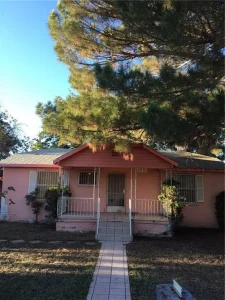
A Real El Paso Example: When a MERP Claim Took Up Almost Half the Home’s Value
We bought an inherited house from a family whose grandfather had spent the later years of his life in a nursing home.
He had received Medicaid-covered long-term care, and when the family went to sell the property, there was a substantial claim through the Texas Medicaid Estate Recovery Program, or MERP.
In this particular case, the amount that had to be dealt with represented almost half the value of the house.
That changed the equity picture immediately.
A family can look at a house and think:
“This property is worth $200,000, so there should be plenty of money left.”
But that’s not necessarily how it works.
You have to account for the mortgage, taxes, liens, estate claims, selling expenses, and anything else that has to be resolved before the heirs receive what remains.
In our transaction, the MERP claim was valid and had to be addressed as part of the sale.
We still bought the house.
The important lesson wasn’t that the property couldn’t be sold.
It was that the home’s market value and the family’s actual usable equity were two very different numbers.
What Actually Happens When the Title Company Finds a Lien?
This is where the title company becomes a big part of the transaction.
Once the contract is opened with title, they review the property records and identify items that could affect the transfer of ownership.
If something shows up, the next step is figuring out exactly what it is.
Who filed it?
How much is actually owed?
Is the balance current?
What does it take to satisfy or release it?
Can it be paid from the sale proceeds at closing?
Sometimes the answer is straightforward.
The payoff is obtained, the amount is deducted at closing, and the lien is released as part of the transaction.
Other times, the problem takes more work.
Maybe the lien is old.
Maybe the amount is disputed.
Maybe the family thought something had already been paid.
Maybe there isn’t enough equity in the house to cover everything attached to it.
That’s why I like getting the title work started early.
The sooner you know what is actually attached to the property, the sooner you can figure out whether the sale is simple—or whether there’s a problem that needs to be solved first.
What If There Isn’t Enough Equity to Pay Everything Off?
This is where the numbers really matter.
Sometimes an inherited house has plenty of equity.
Sometimes it doesn’t.
If the mortgage, liens, taxes, and other amounts that have to be dealt with are close to—or greater than—the value of the property, the sale may become much more complicated.
That’s why I wouldn’t assume a house has equity just because Zillow says it’s worth a certain amount or because the mortgage balance looks low.
I’d want to know three things:
- What could the house realistically sell for in its current condition?
- What are the actual payoff amounts and claims against the property?
- What selling and closing costs still have to come out of the proceeds?
Then you can see what is really left.
If the numbers don’t work, there may be situations where a creditor, lender, or other party has to agree to something before the sale can move forward.
That doesn’t mean every deal is dead.
It means you need to know the real numbers before making promises to heirs, accepting an offer, or assuming there will be money left over.
Market value and usable equity are not the same thing.
Why I Would Check the Title Early
The worst time to discover a title problem is after you’ve already accepted an offer and everyone thinks they’re headed toward closing.
I’d rather know early.
If there’s a mortgage, lien, judgment, unpaid tax balance, ownership dispute, or anything else affecting the property, finding it sooner gives you more time to deal with it.
Sometimes the issue is simple.
Sometimes it takes paperwork.
Sometimes it takes an attorney.
And sometimes, like the Upper Valley inherited house we dealt with, it can stop the sale for a long time.
In that case, we had the property under agreement in 2024, sent it to title, and discovered a family ownership dispute that had to be litigated before the seller could move forward.
The house sat while the legal issue was worked out.
Nearly two years later, the seller finally received the judgment allowing the property to be sold.
That’s why I don’t like waiting until the end of the transaction to find out whether there’s a title problem.
The earlier you know what you’re dealing with, the more options you usually have.
Should You List the House, Sell It As-Is, or Sell Directly?
A lien or mortgage doesn’t automatically tell you how the house should be sold.
If the property also needs significant work, part of that decision may be whether it makes sense to repair the house or sell it as-is.
I’d look at the whole situation.
What is the house worth in its current condition?
How much is actually owed against it?
Does the property need repairs?
How much time do the heirs want to spend dealing with it?
And most importantly:
What does each option realistically leave the family with?
Option 1: Resolve the Issues and List the House
If there’s plenty of equity, the house is in good condition, and the title issues can be resolved without too much difficulty, listing traditionally may put the most money in the heirs’ pockets.
Option 2: Sell the House As-Is on the Market
If the property needs work but still has strong market appeal, selling as-is may be another option.
You may avoid spending money on repairs while still exposing the property to a larger pool of buyers.
Option 3: Sell the House Directly
If the property has significant repairs, a large amount of belongings, complicated title issues, or the family simply doesn’t want to take on everything involved in getting the house market-ready, a direct sale may make more sense.
That can also become more important when an estate needs to be settled and the family would rather sell the house fast in El Paso than spend months preparing it for the traditional market.
That usually means trading some price for speed, convenience, and fewer moving parts.
Sometimes that trade makes sense.
Sometimes it doesn’t.
That’s why I don’t start with:
“How quickly can I buy the house?”
I start with:
What is the house worth, what does it owe, and what will the heirs actually net from each option?
What I Would Do If I Inherited a House With Debt
If I inherited a house and knew there might be a mortgage, liens, unpaid taxes, or other claims attached to it, I wouldn’t start by cleaning the house out or calling contractors.
I’d start with the paperwork.
1. Confirm Who Has Authority to Sell
First, figure out who legally has the authority to sign for the property.
Is probate complete?
Is there an executor or administrator?
Are multiple heirs involved?
Is anyone disputing ownership?
Our Upper Valley deal is a perfect example of why I wouldn’t skip this step.
2. Get the Actual Mortgage Payoff
Don’t rely on an old statement or somebody’s estimate of what is owed.
Find out the current payoff amount.
3. Find Out What Else Is Attached to the Property
This is where title becomes important.
You may discover unpaid taxes, judgments, HOA liens, MERP claims, or something the family didn’t even know existed.
4. Determine What the House Is Actually Worth Today
Not what it would be worth completely remodeled.
Not what the neighbor’s updated house sold for.
What could this house, in its current condition, realistically sell for?
5. Calculate the Real Equity
Now compare the likely sale proceeds against the mortgage, liens, taxes, selling expenses, and anything else that has to be dealt with.
That tells you much more than simply looking at the estimated market value.
6. Compare Your Selling Options
Then decide whether it makes more sense to:
- Make repairs and list traditionally
- Sell the property as-is on the market
- Sell directly
I wouldn’t choose one until I could see the numbers.
Sometimes listing is clearly the better financial move.
Sometimes the condition, debt, legal issues, or amount of work involved makes selling as-is more practical.
The important thing is that you’re making that decision based on the actual property, actual debt, and actual numbers—not assumptions.
Frequently Asked Questions About Selling an Inherited House With a Mortgage or Lien
Can I Sell an Inherited House Before Probate Is Finished?
Sometimes, but it depends on how the estate is being administered and who has legal authority to sell the property. I wouldn’t accept an offer until you know who has authority to sign and whether the sale can legally move forward.
What If the Mortgage Is More Than the House Is Worth?
Then you may not have enough equity to pay off the loan and normal selling expenses from the proceeds. Before making any decisions, get the actual mortgage payoff and determine what the house could realistically sell for in its current condition.
Do I Personally Inherit the Mortgage?
Inheriting a house does not automatically mean you personally become responsible for every debt attached to it. But a mortgage or other valid claim against the property can still affect what happens when the house is sold.
Can I Sell an Inherited House With Back Property Taxes?
Potentially, yes. Delinquent property taxes or a tax lien do not necessarily mean the house cannot be sold, but they generally need to be addressed as part of the transaction. The first step is finding out exactly what is owed.
What If the Heirs Don’t Agree About Selling?
That can become a much bigger issue than the condition of the house itself. If ownership or the authority to sell is disputed, legal help may be necessary before the property can move forward. We’ve dealt with an Upper Valley inherited property where a family dispute delayed the sale for nearly two years.
Can I Sell the House If It Still Has Belongings or Needs Repairs?
Yes. Depending on your goals, you may be able to clean and repair it before listing, sell it as-is on the market, or sell directly without cleaning everything out first.
What Happens If Title Finds a Lien I Didn’t Know About?
Don’t panic. First find out what the lien actually is, who filed it, how much is owed, and what is required to resolve or release it. Some issues are straightforward. Others can take considerably more work. That’s one reason I like opening title early rather than discovering a problem right before closing.
If You’re Not Sure What’s Attached to the House, Start There
If you inherited a house in El Paso and you’re not sure what’s owed, who has authority to sell, or whether the property is even ready to go on the market, I’d start by figuring that out before making any big decisions.
Once you know what the house is worth, what debt or claims are attached to it, and what condition it’s in, the options usually become much clearer.
At We Buy Casa, I can help you look at both sides of the decision. I buy houses directly, but I’m also a licensed real estate agent, so if listing the property is likely to leave you with more money, I’ll tell you that too.
If you want to see what the process looks like, take a look at How It Works.
This article is for general informational purposes only and is not legal, tax, probate, Medicaid, estate-planning, or title advice. Every inherited-property situation is different. If you are dealing with probate, liens, MERP claims, ownership disputes, or other estate-related issues, consult the appropriate attorney, tax professional, title company, or other qualified professional for guidance specific to your situation.
