
A vacant house can look perfectly fine one day.
Then the next morning your contractor calls and says:
“Someone broke into the house last night.”
Unfortunately, I know that feeling firsthand.
We had a house we were remodeling on Fred Wilson in Northeast El Paso. The property was near a busy thoroughfare with a lot of vehicle and pedestrian traffic, along with apartments and commercial activity nearby.
None of that means a break-in is going to happen.
But our house was vacant, under construction, and visible to a lot of people passing through the area.
One morning, our contractor arrived and immediately knew something was wrong.
Someone had pried open the metal security doors and gotten inside.
And they didn’t leave empty-handed.
What Was Stolen From Our Vacant House
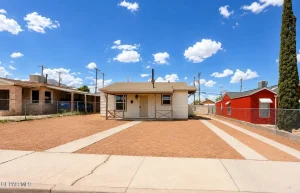
At the time, we were in the middle of the renovation, so several new materials were still sitting inside waiting to be installed.
The thieves took:
- Upper kitchen cabinets
- Two mini-split systems
- A mirror
- Lighting fixtures that had not been installed
- Some of our workers’ tools
That was one of my first big lessons from the experience.
When you’re remodeling a house, it’s easy to think of those boxes as:
Cabinets waiting for installation.
Or:
The HVAC equipment we’re putting in next week.
Someone breaking into a vacant house sees something completely different.
They see brand-new items that can be carried out the door.
What We Did After the First Break-In
Once we realized what had happened, we filed a police report and went through the house to figure out exactly what was missing.
If you discover that a vacant property has been broken into, I’d start by documenting everything before you begin cleaning up.
Take pictures of the damaged doors or windows. Make a list of everything that appears to be missing. Gather receipts, model numbers, serial numbers, invoices, or anything else you have showing what was inside the property.
And walk the entire house.
Don’t assume the first missing item you notice is the only thing they took.
Check:
- Appliances
- HVAC equipment
- Cabinets and fixtures
- Tools
- Electrical and plumbing materials
- Doors and windows
- Anything else that was waiting to be installed
Sometimes you don’t realize something is gone until your contractor asks:
“Hey… where’s the other mini-split?”
Not exactly the phone call you want.
If you think someone may still be inside the property, don’t go searching the house yourself. Stay somewhere safe and contact law enforcement.
The House Was Broken Into a Second Time
Unfortunately, the first break-in wasn’t the end of it.
From what we could tell, whoever came back appeared to be looking for one of the mini-split blowers that had already been mounted on the wall.
Luckily, we had taken it down the day before.
That second break-in changed the way I looked at vacant-property security.
After the first one, my thinking was:
We need to repair the doors.
After the second one, it became:
We need to make it obvious that coming back here is not going to be easy.
There’s a difference.
What We Changed After the Second Break-In
We replaced and secured the iron doors at the entrances.
Then we installed Ring cameras covering the front, side, and rear of the property.
We could monitor the cameras from our phones, and the cameras had motion-activated lighting. They also allowed us to communicate through them if someone approached the house.
Now somebody walking onto the property at night wasn’t approaching a dark, apparently forgotten house.
Lights came on.
Cameras were watching.
We could get an alert.
And if necessary, we could speak through the system.
Between the stronger doors, cameras, lighting, and the fact that we were keeping a much closer eye on the property, it was a lot less inviting than it had been before.
After that, we didn’t have another break-in.
That doesn’t mean cameras or security doors make a house impossible to burglarize.
Nothing does.
The goal is to make your house harder to enter, easier to monitor, and less attractive as a target.
Start With the Doors
This sounds obvious, but after our experience, this is where I would start.
If someone can pry a door open in thirty seconds, a security camera may just give you a really nice video of them stealing your stuff.
That’s not exactly the outcome we’re going for.
Walk around the property and check every exterior door.
Make sure the locks and deadbolts work. Look at the door frames. Check whether any door can easily be pried away from the jamb.
A strong lock attached to a weak door frame isn’t accomplishing much.
Depending on the property, you may also consider metal security doors or other additional protection at vulnerable entrances.
For our Fred Wilson property, upgrading the entry doors became an important part of the solution.
Don’t Forget Sliding Doors and Windows
Sliding glass doors deserve attention too.
Make sure the lock works properly. You can also place a properly sized rod or similar device inside the track to help prevent the door from sliding open.
Then walk the perimeter and look at the windows.
Instead of looking at the house like the owner, try looking at it like someone who wants to get inside.
Ask yourself:
Which entrance looks easiest?
That’s probably where I’d start.
Cameras Can Make a Big Difference
After what happened to us, cameras are something I take much more seriously on vacant properties.
The biggest benefit isn’t necessarily getting video after somebody steals something.
It’s knowing that somebody is there while it’s happening.
For a vacant property, I’d want to cover the areas that give someone access to the house:
- Front entrance
- Driveway
- Side access
- Rear entrance
- Areas where equipment or materials are stored
If you use internet-connected security cameras, protect those too. The Federal Trade Commission recommends using strong unique passwords, keeping camera and app software updated, using encrypted Wi-Fi, and enabling two-factor authentication when available.
In other words, don’t secure the house and then leave the camera account protected by a password like password123.
We’re trying to solve problems here, not create new ones.
Add Motion-Activated Lighting
Darkness gives somebody privacy.
Light takes some of that away.
Motion-activated exterior lights can make someone approaching a vacant property suddenly realize:
This place isn’t as unattended as I thought.
Our camera system had lights that activated when somebody approached.
You can use camera-mounted lights or separate motion-activated fixtures. The important thing is covering the areas where someone would likely approach the house.
Security works better in layers.
A better door is good.
A camera is good.
Lighting is good.
Put them together and the property becomes a much less convenient target.
Be Careful About Leaving New Materials Inside
This was one of the biggest lessons from our renovation.
A vacant house under construction can accidentally become a storage unit full of brand-new merchandise.
Cabinets.
Mini-splits.
Lighting.
Plumbing fixtures.
Appliances.
Tools.
Boxes start piling up because the contractor plans to install everything over the next few days.
That may be convenient for the job.
It can also be very expensive if someone gets inside.
When possible, I’d coordinate deliveries closer to the actual installation date instead of leaving valuable materials sitting in the house for weeks.
If something expensive has to remain inside, keep it away from windows and out of obvious view.
And contractors should think carefully about leaving valuable tools overnight.
The less valuable stuff sitting inside an empty house, the less there is to steal.
Make the Property Look Like Someone Is Paying Attention
One of the easiest ways for a vacant property to attract attention is to look forgotten.
The grass gets high.
Flyers pile up.
Trash sits near the curb.
Nobody comes or goes.
The lights are always off.
None of those things alone means a house is abandoned. But when they start piling up together, a vacant property can begin to look abandoned, and that can attract the wrong kind of attention.
So even if nobody lives there, I’d try to make the property look maintained.
- Keep the yard under control.
- Remove flyers and mail.
- Pick up trash.
- Visit the house regularly.
If you live outside El Paso, have somebody local check on it.
That could be a family member, contractor, neighbor, property manager, or someone else you trust.
You don’t have to make the house look occupied.
You just don’t want it screaming:
“Nobody has checked on me in six weeks.”
Some Vacant Houses Are More Visible Than Others
A burglary can happen in almost any neighborhood.
I wouldn’t assume that a house is safe simply because it’s in an area where you normally wouldn’t expect problems.
At the same time, some properties are naturally more visible than others.
Our Fred Wilson house was near a busy roadway and other residential and commercial activity. A lot of people passed through that area.
Properties near busy streets, commercial corridors, apartment complexes, pedestrian routes, or easily accessible alleys may simply be seen by more people.
That doesn’t mean those locations cause crime.
It means more people may notice that the house is vacant.
And once somebody realizes nobody seems to be living there, the property may get unwanted attention.
Make Sure Your Insurance Actually Covers a Vacant House
This is one thing homeowners can easily overlook.
You already have homeowners insurance, so you assume:
I’m covered.
Maybe.
But don’t assume it.
The Texas Department of Insurance says some home policies stop or restrict certain coverage once a property has been vacant for the period specified in the policy. TDI notes that 60 days is common, although the actual terms depend on your policy. It recommends asking your insurer how it defines vacancy and whether claims will still be covered while the house is vacant.
So if your house is going to sit empty, call the insurance company or agent.
I would specifically ask:
- Does my current policy cover the house while it’s vacant?
- How does the policy define “vacant”?
- Does anything change after a certain number of days?
- Are theft and vandalism still covered?
- Do I need different coverage or an endorsement?
- Are there security requirements I need to follow?
And if the vacant property is also undergoing a major renovation, tell the insurance company that too.
Insurance for a vacant property and insurance for a property under construction or renovation are not things I would guess about. If the vacant property is also undergoing a major renovation, tell the insurance company that too. Coverage can vary depending on the property, the work being done, and the policy, so I wouldn’t guess about it. Ask your insurer what coverage applies to your specific situation.
The important thing is simple:
Tell the insurance company what is actually happening with the property before you have a claim.
Finding out after a break-in that your policy treated a vacant house differently is not the time to learn how vacancy coverage works.
If Someone Breaks In Once, Assume They Might Come Back
This was probably the biggest lesson we learned.
Someone who has already been inside the house may now know:
- The property is vacant
- What materials are inside
- Where equipment is located
- How easy the doors are to enter
- When contractors tend to be there
- What they didn’t get the first time
In our case, they did come back.
So after a break-in, I wouldn’t simply repair the damaged door and assume the problem is over.
I’d reassess the entire property.
- Doors and windows
- Lighting
- Camera coverage
- Materials stored inside
- Tools left at the property
- How often somebody checks the house
- Whether the exterior makes it obvious the property is vacant
The question isn’t only:
How did they get in?
It’s also:
Why did this house look like a good opportunity?
That’s what you want to change.
My Vacant-House Security Checklist
If I had a vacant house in El Paso today, these are the basics I’d want covered:
- Verify the insurance coverage
- Secure every exterior door
- Secure sliding doors and accessible windows
- Install exterior cameras when practical
- Use motion-activated lighting
- Avoid storing expensive materials longer than necessary
- Keep the yard and exterior maintained
- Have somebody check the house regularly
- Keep receipts and records for valuable equipment or materials
- After a break-in, reassess the entire property instead of only repairing the damaged entry
None of that guarantees somebody won’t try to get in.
The goal is to make the property harder to enter, easier to monitor, and less attractive than a house that looks completely forgotten.
How Long Do You Want to Keep the House Vacant?
There’s another side to all of this.
Cameras cost money.
Insurance costs money.
Utilities cost money.
Yard maintenance costs money.
Repairs cost money.
And somebody still needs to keep an eye on the property.
If you’re actively renovating a house and have a clear plan to finish and sell it, those costs are part of the project.
But if the house is vacant because you inherited the property, moved away, or simply haven’t decided what to do yet, months can turn into a year pretty quickly.
And at some point, you may have to decide whether it makes more sense to keep carrying the property or sell your house in El Paso and move on.
That’s why I don’t think homeowners should look only at the future sale price.
You also have to consider the cost, work, and risk of keeping the property vacant until you get there.
At We Buy Casa, we’ve dealt with vacant houses from both sides. We’ve renovated them ourselves, dealt with the headaches that come with keeping them secure, and helped homeowners decide whether it makes more sense to repair, list, sell as-is, or sell directly.
At some point, the same questions that come up when selling a vacant house in El Paso start to matter here too: repair costs, carrying costs, cleanup, and how long you actually want to keep the property.
And if selling directly might make sense for your situation, you can also see How It Works and what that process looks like from start to finish.
This article is for general informational purposes. Security needs and insurance coverage vary by property and policy. Review your insurance policy and speak with your insurer or licensed insurance professional about coverage for a vacant or renovated property.
