
So you added a room, converted the garage, built an addition, added a bathroom… and somewhere along the way nobody pulled a permit.
Or maybe the City has already told you something isn’t compliant.
Now you’re thinking:
Can I even sell this house?
The short answer is yes, in many situations you can sell a house with code violations in El Paso.
First, don’t panic. Second, don’t start tearing anything down yet. And third, I’m not here to lecture you about what you should have done five or ten years ago. What’s done is done.
I’ve dealt with enough El Paso properties over the years to know that these situations come up more often than people probably realize. The important thing is figuring out exactly what kind of problem you have.
Because there is a big difference between:
- Work that was never permitted
- Work that is actually unsafe, improperly built, or not compliant with applicable codes or zoning requirements
Those two things often get lumped together, but they are not necessarily the same problem. And I’ve personally dealt with both situations.
First, What Kind of Code Violation Are We Dealing With?
When somebody tells me:
“My house has code violations.”
My first response is usually:
“Okay… what kind?”
Because that can mean a lot of things.
Maybe you converted your garage years ago and never pulled a permit. Maybe somebody added a bedroom before you even owned the house. Maybe electrical or plumbing work was completed without permits.
Maybe an addition was built too close to the property line. Maybe the City has issued an actual code-enforcement notice. Or maybe someone simply told you, “That doesn’t look like it’s up to code,” and now you’re assuming the worst.
Those are completely different situations.
The City of El Paso generally requires permits for many types of additions, garage conversions, structural remodeling, plumbing work, electrical work, and other alterations.
But the first thing I would want to know is not:
“How much is this going to cost me?”
It’s:
“What are we actually dealing with?”
Start there.
Unpermitted Work Doesn’t Automatically Mean It’s Not Up to Code
This is one of the biggest misconceptions I see.
Let’s say a contractor converted a garage ten years ago.
The walls are straight. The electrical looks professionally done. The plumbing works. The room has been used every day for years without a problem.
Then you discover nobody ever pulled a permit.
Does that automatically mean the construction was done poorly?
No.
It means the required permitting process may not have been followed.
That’s still something you need to deal with, but it’s different from finding exposed wiring, improper structural work, unsafe plumbing, or an addition that was built somewhere it shouldn’t have been.
I’ve seen improvements that appeared to be professionally completed but weren’t permitted. I’ve also seen improvements where the bigger problem had almost nothing to do with construction quality.
Here’s a real example.
Two Real El Paso Examples of Code and Permit Problems
I’ve dealt with situations like this firsthand, and they show why it’s important to figure out exactly what kind of issue you have before deciding what to do.
Example #1: The Almost 500-Square-Foot Storage Room 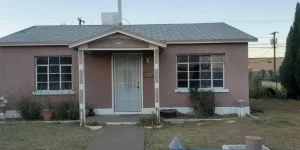
We were buying a house from a seller who had constructed an addition of almost 500 square feet along the side of the property.
And this wasn’t exactly a beautiful new primary suite.
It was unfinished and basically functioned as a giant storage room.
Five hundred additional square feet sounds great until you ask what those 500 square feet actually do for the house. This wasn’t finished living space. It wasn’t adding another bedroom that buyers would pay more for. It wasn’t a nice family room.
It was basically a very large storage area attached to the house, so keeping it wasn’t necessarily making the property more valuable.
The bigger problem was where it had been built.
The addition sat only about five feet from the property line, which raised concerns about the setback requirements that applied to that particular property.
Setback requirements can vary depending on the zoning, property, and type of improvement, so I wouldn’t tell somebody:
“Every property in El Paso needs exactly X feet.”
You have to determine what applies to that specific property.
In our case, I knew the location of the addition could potentially create problems with the survey and eventually become our problem when we went to resell the house.
That’s something sellers sometimes overlook.
An improvement can be built pretty well and still create another problem.
At that point, I had to ask:
“Is this addition valuable enough to justify taking on the headache?”
For us, the answer was no.
We worked out an agreement with the seller to have the addition demolished.
Problem solved.
Not every situation needs to end that way. Sometimes correcting an issue or going through the proper permitting process makes sense.
But sometimes the simplest answer really is:
“This thing isn’t helping the house anyway. Let’s get rid of it.”
That’s why I wouldn’t spend thousands of dollars trying to fix something until you know whether it’s even worth fixing.
Example #2: The Garage Apartment That Cost a Seller a Full-Price Buyer
The second situation happened on the traditional real estate side of my business.
I was helping a homeowner sell their property on the open market. The owners had converted the garage into what was basically an apartment with a kitchen, bathroom, and living space.
And from what we could see, the work appeared to have been done well.
There was one problem.
The garage conversion had never been permitted with the City.
Could the house still be sold? Yes.
Could another buyer decide they were perfectly comfortable purchasing it? Yes.
Could a qualified contractor or other professional evaluate the work and help determine what needed to be done? Absolutely.
But here’s what happened in the real world.
We received a full-price offer.
We were right around the point of going into escrow when the buyer discovered that the garage conversion hadn’t been permitted.
And the buyer backed out.
Not because the kitchen fell off the wall.
Not because the bathroom exploded.
Not because we discovered the garage was being held together with duct tape and prayer.
The buyer simply wasn’t comfortable with the uncertainty.
And that’s something homeowners need to understand.
These two situations were very different, but they taught the same lesson:
A property issue doesn’t have to make your house unsellable to affect the sale.
Sometimes the problem is physical.
Sometimes it’s zoning or permitting.
And sometimes the biggest problem is simply that a buyer sees uncertainty and decides they don’t want to deal with it.
That’s why I’d rather identify these issues upfront than let them surprise us halfway through a transaction.
A Problem Doesn’t Have to Make Your House Unsellable to Affect the Sale
Homeowners sometimes ask:
“But can somebody still buy it?”
That’s not always the most important question.
A better question may be:
“Could this make some buyers decide they don’t want to buy it?”
Absolutely.
Our garage-conversion seller learned that firsthand.
One buyer might look at the situation and say, “I’m okay with it.”
Another buyer might say, “Let’s have somebody inspect the work and figure out what we’re dealing with.”
And another buyer might say:
“Nope. I’m out.”
That’s the market.
You don’t get to choose how every buyer reacts.
Can You Sell a House With Unpermitted Work in El Paso?
Yes, an unpermitted improvement does not automatically make a house impossible to sell your house in El Paso.
But it can complicate the transaction.
A knowledgeable buyer may start asking questions when they notice a garage conversion, large addition, or major improvement.
- When was it built?
- Who completed the work?
- Was a permit pulled?
- Does the square footage match the property records?
- Was electrical or plumbing added?
- Was the work inspected?
Once somebody starts pulling that thread, you want to know what’s on the other end of it.
That’s why I would rather identify these issues before we’re halfway through a transaction.
What About the Seller’s Disclosure?
This part matters.
Selling a property as-is does not mean:
“Hopefully nobody notices.”
Texas sellers in many residential transactions are required to provide a Seller’s Disclosure Notice, although exceptions exist depending on the transaction.
That disclosure addresses known room additions, structural modifications, alterations or repairs made without necessary permits or not in compliance with applicable building codes, along with certain governmental notices affecting the property.
In plain English:
If you know about a problem, don’t build your entire selling strategy around hoping the buyer doesn’t find out.
I’d rather address the issue upfront than have it blow up a transaction right before closing.
Properly disclosing what you know also allows the buyer to make an informed decision.
If there is ever a question about your specific legal disclosure obligations, speak with your real estate professional and, when appropriate, a Texas real estate attorney.
How Code Violations Can Affect a Traditional Home Sale
This is where the type of buyer starts to matter.
A buyer using a traditional mortgage and a cash buyer may look at the same property very differently.
Most traditional buyers will order a home inspection. A home inspector may point out visible defects, questionable construction, unusual electrical work, plumbing issues, structural concerns, or conditions that cause the buyer to start asking more questions.
A normal Texas home inspection is not technically the same thing as a code-compliance inspection.
But that doesn’t make obvious problems disappear.
An inspector may flag something. The buyer may investigate further. An appraiser may notice something that raises another question.
Depending on the loan type and condition of the property, the lender may also require certain repairs or additional review.
And suddenly the thing you’ve lived with for ten years becomes the main topic of the transaction.
That doesn’t mean the sale is dead.
It means there may be more hurdles.
Can a Cash Buyer Buy a House With Code Violations?
Yes.
A cash buyer can decide to purchase the property knowing that there are repairs, permit issues, or other problems that need to be addressed.
If I’m looking at the property as a potential purchase through We Buy Casa, I’m not asking:
“Is this house perfect?”
If the house were perfect, you probably wouldn’t be calling me.
I’m trying to figure out:
- What is the problem?
- Can it be corrected?
- What will it probably cost?
- What risk am I taking on?
- Does the deal still make sense after accounting for it?
Maybe we need a contractor.
Maybe we need permits.
Maybe we need an engineer.
Maybe something needs to be removed.
Maybe we discover the issue isn’t nearly as serious as everyone initially thought.
Every situation is different.
The biggest difference is that a cash buyer isn’t depending on a traditional mortgage approval. That creates more flexibility.
But that flexibility has value.
It doesn’t mean a cash buyer should pay the same amount that somebody would pay for a completely repaired, fully marketable property.
It simply gives the seller another option.
Should You Fix Code Violations Before Selling Your House?
Maybe.
I know that’s not the wonderfully definitive internet answer you were hoping for.
But it’s the correct answer.
Fixing the Issue May Make Sense If:
- The problem is relatively inexpensive to correct.
- The path to fixing it is clear.
- Correcting it significantly improves the property’s marketability.
- You have the money and time to handle it.
- The expected increase in your net proceeds justifies the work.
If spending $3,000 solves the problem and makes the house much easier to sell, that’s probably worth considering.
I Would Think Twice Before Spending the Money If:
- Nobody can clearly tell you what the final cost will be.
- Correcting the problem requires major construction.
- The improvement doesn’t add much value anyway.
- There are zoning, structural, or setback complications.
- You don’t have the money to take on the project.
- The difference between selling repaired and selling as-is doesn’t justify the time, money, and aggravation.
Remember my giant storage-room example.
Could we possibly have spent time and money figuring out a way to preserve it?
Probably.
But why?
It wasn’t doing enough for the property to justify the headache.
Sometimes the smartest real estate decision is surprisingly simple.
You May Have Three Selling Options
When I meet with a homeowner dealing with a property issue like this, I don’t automatically think:
Cash offer.
I look at three possible exits.
1. Correct the Problem and Sell Traditionally
Sometimes this will put the most money in your pocket.
If the repairs make financial sense and you’re willing to do the work, this could be the best option.
2. Disclose the Issue and Sell the House As-Is on the Market
Depending on the property and the problem, you may be able to disclose what you know, price the house accordingly, and find a buyer willing to take it on.
That could be a traditional buyer, an investor, or someone specifically looking for a property they can improve.
There may be more uncertainty, but it’s still an option worth analyzing.
3. Sell Directly for Cash
Maybe you don’t want months of contractors, permits, repairs, inspections, and uncertainty.
Maybe you don’t want to spend thousands of dollars before you even know whether you’re getting that money back.
In that case, a direct sale may make more sense.
You’ll typically trade some price for convenience and reduced risk.
Sometimes that’s the right trade.
Sometimes it isn’t.
Don’t Compare a Cash Offer to the Perfect Version of Your House
This is where homeowners can accidentally fool themselves.
They’ll say:
“My neighbor sold for $300,000 and this investor is only offering me $230,000.”
Okay.
But did your neighbor have an unpermitted garage apartment?
Did their addition need to be demolished?
Did they need $35,000 in repairs?
Did they spend three months fixing the house?
Did they pay holding costs?
Did they have traditional selling expenses?
Those things matter.
The correct comparison isn’t:
Cash offer vs. dream retail price.
It’s:
What would I realistically net from each option after considering repairs, selling expenses, time, and risk?
That’s the number I care about.
What I Would Do If This Were My House
If you’re sitting there right now wondering what to do, here’s the order I would follow.
Step 1: Figure Out What Actually Happened
Was a permit required?
Was one ever pulled?
Is there an actual code violation?
Is there an open City case?
Is this a zoning or setback problem?
Or are you dealing with something somebody simply assumes is wrong?
Start with facts.
Step 2: Determine Whether the Work Itself Is a Problem
If you’re concerned about construction quality, have the appropriate contractor, engineer, or qualified professional look at it.
Don’t rely on Uncle Joe saying:
“Looks good to me.”
Uncle Joe may be wonderful.
He may also not be the person you want evaluating your load-bearing wall.
Step 3: Find Out What Correcting It Would Actually Cost
Don’t guess.
Get real numbers.
You may discover the problem is much smaller than you thought.
Or you may discover exactly why selling as-is suddenly sounds pretty attractive.
Step 4: Determine the Current and Repaired Value
What would the house realistically sell for today?
What might it sell for if the issue were resolved?
How much will resolving it cost?
This is where having somebody who understands both the traditional market and the investor side becomes useful.
Step 5: Compare the Net Numbers
Then compare:
- Fix and list
- List as-is
- Sell directly
That’s how you make a rational decision.
Not by letting one scary phrase like “code violation” convince you that your house is doomed.
Frequently Asked Questions
Can You Sell a House With Code Violations in El Paso?
Yes, in many situations you can. A code or permit issue does not automatically make a property unsellable. The type of violation, severity of the issue, financing, disclosure requirements, and buyer’s willingness to take it on can all affect the transaction.
Can You Sell a House With an Unpermitted Addition?
Potentially, yes. An unpermitted addition doesn’t automatically prevent the house from being sold. However, buyers may have concerns, and the issue can create complications involving inspections, appraisal, financing, zoning, or future resale.
Do I Have to Fix Code Violations Before Selling My House?
Not necessarily. Depending on the issue, you may be able to correct it before listing, disclose the condition and sell the property as-is, or sell directly to a buyer willing to take responsibility for addressing it.
Will a Cash Buyer Purchase a House With Code Violations?
Some will. A cash buyer can evaluate the condition, estimate the cost and risk of correcting the problem, and account for those issues in the purchase price without relying on traditional mortgage financing.
Yes, You Can Still Sell a House With Code Violations in El Paso
If you made an addition without pulling a permit, converted your garage years ago, or discovered some other issue with your El Paso property, don’t automatically assume you can’t sell it.
You probably have more options than you think.
But don’t ignore the issue either.
I’ve personally watched an unpermitted garage conversion cost a seller a full-price buyer.
I’ve also purchased a property where an addition simply wasn’t worth keeping, and removing it made more sense than inheriting a problem we’d eventually have to deal with ourselves.
That’s why my first question isn’t:
“How quickly can I buy your house?”
It’s:
“What are we actually dealing with?”
Once we know that, we can figure out whether it makes more sense to correct the problem, sell the house as-is on the market, or sell directly for cash.
At We Buy Casa, I can look at both sides with you.
I’m a local El Paso home buyer and a licensed real estate agent, so I’m not attached to one particular outcome.
If fixing the issue and listing the property is likely to put significantly more money in your pocket, I’ll tell you.
If selling it as-is makes more sense because of the cost, risk, or hassle involved, we can look at that option too.
Either way, the first step is simply figuring out what you have.
No pressure. No scare tactics. And no judgment about that garage conversion you probably should have permitted ten years ago.
We can deal with Past You later.
For now, let’s figure out the house.
This article is for general informational purposes and is not legal, engineering, permitting, or code-compliance advice. Requirements vary by property and situation. When necessary, consult the City of El Paso or the appropriate legal, engineering, or construction professional.
